Thursday

"Whoever eats my flesh and drinks my blood has eternal life"


The Feast of Corpus Christi this Sunday gives us the one very important matter that still needs to come before us: the sacrament of the Eucharist. 
CATHOLIC LIVING TODAY Corpus Christi Sunday, June 22, 2014 (CorpisChristiA)
From the
Center for Liturgy at Saint Louis University

Sunday Mass Readings

Podcast of the Readings 
Video of Reflections on Readings
Lecturas y Comentarios 
Prayer of the Hours
BQ: Do you really believe in the True Prescence of Jesus at Communion?

--------------------------------------------
Questions on Sunday's Readings for use by discussion groups,
prayer groups, or for individual prayer.
--------------------------------------------
 
First Reading
Book of Deuteronomy, Chapter 8, Verses 2-3, 14b-16a

1. Did the desert trials test the people’s obedience to God, or their trust in God? “He let you be afflicted with hunger, then fed you with manna...in order to make you understand that one does not live by bread alone, but by every word that comes from the mouth of the Lord.” In this statement is the bread or the promise of God the source of their life?

2. What kinds of situations require blind trust on your part? With those in mind, discuss, “He therefore let you be afflicted with hunger, and then fed you with manna.”

Responsorial Psalms
Psalm 147: 12-15, 19-20

1. The Psalm tells us that our God is a good provider. In what way has the Lord filled you with the 'best of wheat?'

2. 'Swiftly runs his word!' according to our psalmist. In what way do you feel the power and presence of the Word of the Lord in your life?

Second Reading
First Letter of St. Paul to the Corinthians, Chapter 10, Verses 16-17

1. In the Eucharist we are joined both with Christ and with each other in love. Discuss. How can we be “Eucharist” to each other?

2. “When we eat, we incorporate our food into ourselves. The opposite is true with regard to the Eucharist. When we partake of that bread we are transformed into it” (Dianne Bergant, C.S.A.) Explain in your own words what this means.

Gospel
According to John, Chapter 6, Verses 51-58

1. Discuss Aelred R. Rosser’s statement, “Jesus gives us himself in the Eucharist, not divided or in part, but his very self: his life, his being, his force, his soul and divinity.”

2. God was with his people on their journey, nourishing them with manna and water. How does God respond to your needs on your journey? What is different about the food God gave the people in the desert and the food he gives us?

"God so loved the world that he gave his only Son"

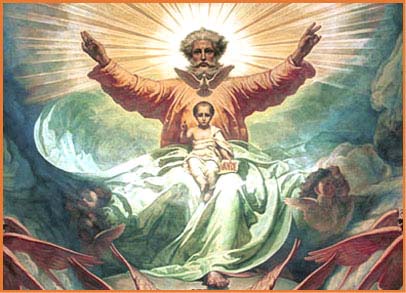
The Triune nature of God is the principal mystery of the Catholic faith. It is the first and last horizon of the universe and of history: the Love of God, the Father and the Son and the Holy Spirit. God is not solitude, but perfect communion. All three in a great dynamic of love, are so close that they are One God.

Sunday Readings' Discussion Questions

Pentecost Sunday, June 15, 2014 (HolyTrinityA)
From the Center for Liturgy at Saint Louis University

Sunday Mass Readings
Podcast of the Readings 
Video of Reflections on Readings
Lecturas y Comentarios 
Prayer of the Hours
BQ: Why do you do the sign of the Cross?

--------------------------------------------
Questions on Sunday's Readings for use by discussion groups,
prayer groups, or for individual prayer.
--------------------------------------------

First Reading

Book of Exodus, Chapter 34, Verses 4b-6; 8-9

1. Besides his name, what did God reveal about himself to Moses on Mount Sinai? What was Moses’ response to this revelation? What is your response to knowledge of God’s love?

2. If the Lord were to come along in our company, would it mean that God loves us every moment exactly as we are, even though we are “stiff-necked” sometimes? Do you forgive others when they are harsh to you? Can you accept them as they are?

Responsorial Psalm
Responsorial Psalm: Daniel 3:52, 53, 54, 55, 56

1. If those courageous young men in the fiery furnace were able to praise God in these words, in spite of their circumstances, the least we can do is to sing His praises within our own relatively comfortable surroundings. What inspires you to sing His praises?

2). Have you undergone hardship or persecution because of your unwavering faith? Give an example.

Second Reading
Second Letter of St. Paul to the Corinthians
Chapter 13, Verses 11-13


1. What do you know about the Trinity from the following lines of the reading? ”The grace of the Lord Jesus Christ and the love of God and the fellowship of the Holy Spirit be with all of you.” If God’s nature is love, then has he invited us to come along in his company? What are the implications for our community?

2. We can all agree with and/or encourage each other in order to live in peace. How important is this to you? Can you agree with most people? Do you feel the tone of this reading is comforting or admonishing?

Gospel
According to John, Chapter 3, Verses 16-18

1. What did the Father do that tells you he “loved the world”? What did the Son do? What have you done as a response to God’s immense love for the world and for you personally?

2. The Holy Spirit is the Father and Son’s mutual love. How does the Holy Spirit help you enter the eternal circuit of love in God?

Online Sunday Bible Study Group
Please share below your reflections on the Sunday Readings. May we be blessed by God's words as reflected in your thoughts and experience-sharing. 
--

Sunday

“Receive the Holy Spirit."


Pentecost is not just another Sunday. It is a feast equal to Christmas and Easter themselves. The Feast of Pentecost, originally the Jewish Feast of Weeks commemorating the gift of the Law to Moses on Mt. Sinai 50 days after the Exodus, was the day when the Holy Spirit was poured out in the Upper Room upon the apostles and other disciples in the form of tongues of fire and a strong wind, fifty days after Easter Sunday, the day marking the resurrection of the Lord Jesus.

Sunday Readings' Discussion Questions
Pentecost Sunday, June 8, 2014 (PentecostA)
From the Center for Liturgy at Saint Louis University

Sunday Mass Readings
Podcast of the Readings 
Video of Reflections on Readings
Lecturas y Comentarios 
Prayer of the Hours
BQ: Should you Confess before you receive Communion?

--------------------------------------------
Questions on Sunday's Readings for use by discussion groups,
prayer groups, or for individual prayer.
--------------------------------------------
First Reading
Acts of the Apostles, Chapter 2, Verses 1-11

1. In the First Reading (Acts 2:1-11), the Holy Spirit was given as tongues of fire accompanied by a strong driving wind. In the Gospel (John 20:19-23) Jesus was in their midst and gave the Spirit to the disciples by breathing on them. Do you have an idea how there could be two different descriptions of this supernatural event?

2. Is the Holy Spirit that came only to the apostles and Mary in the upper room? Or is it dynamic and constant in every life? Is the Spirit in your own life? How were the disciples different after the Spirit’s arrival? Would you be different if you were confident that the Spirit is with you? Explain.

Responsorial Psalm
Psalm 104: 1, 24, 29-31, 34

1. As the Psalm says, without the divine breath of the Lord we would be nothing. In what way does the divine breath empower you to be a new creation?

2. The Psalm Response asks the Lord to send out his Spirit. Having received the holy Spirit when you were baptized, in what way are you called to go forth and do His works?

Second Reading
First Letter of St. Paul to the Corinthians
Chapter 12, Verses 3b-7, 12-13


1. St. Alphonsus Rodriguez was a Jesuit Brother (1533-1617), whose job was to answer the door of the Jesuit College in Majorca. He did this for forty years. Would his spiritual gift of service compare to that of St. Francis Xavier, who converted whole countries? How?

2. Were Vivaldi and Michelango given gifts solely for their own pleasure? For whose benefit were they given? Scripture says, “To each individual the manifestation of the Spirit is given for some benefit.” What are your gifts and for what benefit were they given to you?

Gospel
According to John, Chapter 20, Verses 19-23

1. Jesus “breathed” on them. How does this relate to Genesis 2:7, “God formed man of dust from the ground, and breathed into his nostrils the breath of life?” What is the significance for you? How important is the Holy Spirit to you?

2. The disciples’ first task after receiving the Holy Spirit was to forgive sins. What impact does forgiveness of sin have on peace? Is it always easy to forgive? How is your peace when you experience problems with forgiveness?

Online Sunday Bible Study Group
Please share below your reflections on the Sunday Readings. May we be blessed by God's words as reflected in your thoughts and experience-sharing. 
--

Thursday

"He will give you another Advocate to be with you always"


This week, the Sixth Sunday in Ordinary Time, the Readings move us forward in our consideration of the Easter Mystery. We move from the contemplation of Christ's appearances after the resurrection over the last few Sundays to a meditation on the continued presence of Christ in the Church through the Holy Spirit.

Sunday Readings' Discussion Questions
Sixth Sunday of Easter, May 25, 2014 (6EasterA)
From the Center for Liturgy at Saint Louis University

Sunday Mass Readings  
Podcast of the Readings 
Video of Reflections on Readings
Lecturas y Comentarios 
Prayer of the Hours
BQ: What does the Holy Spirit do in your life?

--------------------------------------------
Questions on Sunday's Readings for use by discussion groups,
prayer groups, or for individual prayer.
--------------------------------------------
First Reading
Acts of the Apostles, Chapter 8, Verses 5-8, 14-17

1. In last week’s Gospel we listened to Philip ask for help with his belief. This week he has the city of Samaria high with “great joy.” What do you think caused the change? Why did the crowds “pay attention” to what Philip was saying? What gets your attention in spiritual matters?

2. The Samaritans saw many signs. What are the signs of the presence of God in your life? Do any signs fill you with joy?

Responsorial Psalm
Psalm 66: 1-7, 16, 20

1. The Psalm says, 'Let all the earth cry out to God with joy.' This is in response to the tremendous deeds of God.' Have you seen the works of God in your life? Explain.

2. Our psalmist says 'Hear now, all you who fear God, while I declare what he has done for me.' Have you given witness to what God has done for you? Give an example of how His presence has transformed you. 

Second Reading
First Letter of St. Peter, Chapter 3, Verses 15-18

1. Explain how Christ is a reason for your hope.

2. How does suffering for the sake of truth make us like Christ? How does suffering help us know Christ? What does “suffering for the sake of truth,” mean to you? Give an example of someone who suffers like this today.

Gospel
According to John, Chapter 14, Verses 15-21

1. Do you think you can understand the mysteries of God and how God works in your life simply by studying or reading or discussing? What else does it take? What/Who enables you to recognize the signs in the First Reading?

2. “Whoever loves me will be loved by my Father, and I will love him and reveal myself to him.” Explain how and why you think this quotation works. How does love impact knowledge and understanding in any friendship?

Online Sunday Bible Study Group
Please share below your reflections on the Sunday Readings. May we be blessed by God's words as reflected in your thoughts and experience-sharing. 
--

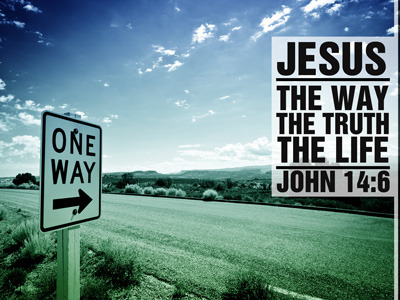
"I am the way and the truth and the life."


This Sunday's Gospel text is taken from St. John's account of the Last Supper. That the Church gives us this Last Supper discourse of Jesus for an Easter Season Eucharist is illuminative. These words are spoken to us now by the Risen Lord, truly alive and present in our midst. In this gospel we find things that Jesus taught before his death beautifully combined with John's inspired interpretation of these teachings, written in full confidence of guidance by the Spirit of Jesus (Jn 16:13).

Sunday Readings' Discussion Questions

Fifth Sunday of Easter, May 18, 2014 (5EasterA)
From the Center for Liturgy at Saint Louis University

Sunday Mass Readings  
Podcast of the Readings 
Video of Reflections on Readings
Lecturas y Comentarios 
Prayer of the Hours
BQ: How Catholic are you? Take the Quiz

--------------------------------------------
Questions on Sunday's Readings for use by discussion groups,
prayer groups, or for individual prayer.
--------------------------------------------

First Reading

Acts of the Apostles, Chapter 6, Verses 1-7

1. How did the new Christian community solve the problem of neglected widows? Did the twelve decide to forego prayer and the ministry of the word in order to help them? “Faith finds its expression in good works, and good works in turn builds faith.” How does the story in this reading illustrate this statement by Aelred Rosser?

2. How did the Church make changes to meet the needs of the times? How important is the ability to make changes? How might this kind of thinking impact the Church today?

Responsorial Psalms
Psalm 33: 1-2, 4-5, 18-19

1. This week's Response is, "Lord, let your mercy be on us, as we place our trust in you." When you place your trust in the Lord, do you become like one of His sheep? Are you then
dependent on His grace and protection? Explain.

2. The Psalm says that the Lord will preserve us in spite of famine. The psalmist here may be speaking more about spiritual famine, instead of physical hunger. Have you ever gone through a time of spiritual hunger? Explain.

Second Reading
First Letter of St. Peter, Chapter 2, Verses 4-9

1. Discuss ways that you have found Christ to be both a stone foundation and a stumbling block in your faith journey.

2. You are “a chosen race, a royal priesthood, a holy nation, a people of his own,” the reading says. How do you announce the praises of “him who called you out of darkness into his wonderful light”?

Gospel
According to John, Chapter 14, Verses 1-12

1. Jesus says, “I am in the Father and the Father is in me.” What does that statement mean to you? Philip wanted a clearer explanation of who the Father is. Can you relate to that? How did Jesus say we can know the Father?

2. The disciples didn’t want Jesus to leave. Can you relate to this desire to be with the people you love? How is human love a reflection of divine love or a participation in it?

Online Sunday Bible Study Group
Please share below your reflections on the Sunday Readings. May we be blessed by God's words as reflected in your thoughts and experience-sharing.

Sunday

"I am the gate. Whoever enters through me will be saved."


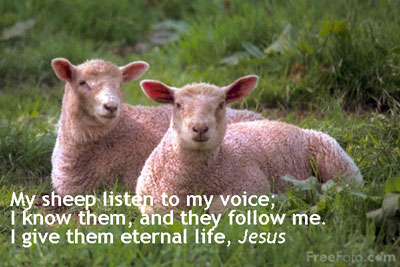
We may misunderstand the voice of God, the shepherd, ignore it, resist it, button our ears to it, but in our moments of sane and solitary wholeness—or maybe in our times of trouble—our spirits pulse to the rhythm of that voice. It resounds within us. If we are going to be anybody's sheep, then let it be Christ's. 

Sunday Readings' Discussion Questions
Fourth Sunday of Easter, May 11, 2014 (4EasterA)
From the Center for Liturgy at Saint Louis University

Sunday Mass Readings  
Podcast of the Readings 
Video of Reflections on Readings
Lecturas y Comentarios 
Prayer of the Hours
BQ: Should Christians perform the sign of the cross?
--------------------------------------------
Questions on Sunday's Readings for use by discussion groups,
prayer groups, or for individual prayer.
--------------------------------------------

First Reading
Acts of the Apostles, Chapter 2, Verses 14a, 36-41

1. The people listening to Peter’s sermon were “cut to the heart” with remorse. What cuts you to the heart? The listeners asked, “Brothers, what should we do?” What action did they take? With what kinds of actions do you respond?

2. Define conversion. Is conversion a once-in-a-lifetime experience? Explain. Who needs conversion? Does conversion involve only a change of behaviors?

Responsorial Psalms

Psalm 23: 1-6

1. If you are one of his sheep, your shepherd will guide you beside restful waters, according to the Psalm. Do you think the analogy of sheep and shepherd is a good one to apply to the relationship your have with the Lord? Why?

2. It is said that David wrote this Psalm on his deathbed. Do you believe the Psalm would be a source of peace for a person facing death? If so, why?

Second Reading
First Letter of St. Peter, Chapter 2, Verses 20b-25

1.Christ’s innocence and lack of vengeance show us what God’s love is like. Does he leave you an example to follow? How can suffering be an occasion of grace?

2. Peter is referring to a kind of suffering that is inflicted on a person for doing something good. Give examples in which this has been the case. Have you had this experience?

Gospel
According to John, Chapter 10, Verses 1-10

1. Flocks would recognize the sound of the shepherd’s voice and come to him, ignoring other shepherds’ voices. In your life can you discern which “voice” belongs to the Good Shepherd? Which of the following is your favorite comparison of Christ to a good shepherd: calling by name, recognition of voice, following the shepherd, not following strangers, shepherd as the gate?

2. The shepherd gathers his sheep into a secure place with one opening and no door. He protects the sheep by lying across the gateway. Is Christ, the Good Shepherd, like this? Can you feel the security of being guarded in this way?

Online Sunday Bible Study Group
Please share below your thoughts on the Sunday Readings. May we be blessed by God's words as reflected in your thoughts and experience-sharing. 
--

Thursday

"Were not our hearts burning within us"


The stranger on the road to Emmaus takes the skepticism and curiosity of the disciples and weaves them into the fabric of the Scripture. Jesus challenges them to reinterpret the events of the past days in light of the Scriptures. During the meal He recreated the Last Supper. He took bread, blessed it and gave it to them. And they recognized Him in the breaking of the break, the first Christian name for the Eucharist.

Sunday Readings' Discussion Questions

Third Sunday of Easter, May 4, 2014 (3EasterA)
From the Center for Liturgy at Saint Louis University

Sunday Mass Readings  
Podcast of the Readings 
Video of Reflections on Readings
Lecturas y Comentarios 
Prayer of the Hours
BQ: Is the Mass a Eucharistic Banquet or a Holy Sacrifice

--------------------------------------------
Questions on Sunday's Readings for use by discussion groups,
prayer groups, or for individual prayer.
--------------------------------------------

First Reading

Acts of the Apostles, Chapter 2, Verses 14, 22-33

1. Can you see how different Peter’s attitude is in this reading than it was during Jesus’ passion and death? To what do you attribute the change? Can you apply your answer to yourself? In other words, could such a change take place in you?

2. Through the centuries, certain Catholics and Christians have in fact condemned and even persecuted the Jewish people. Some have used Peter’s words as a reason: “This man . . . you killed, using lawless men to crucify him.” Do you see that in this reading that it was God’s plan for Jesus to die, and then to rise again, and that therefore the Jews remain the chosen people of God?

Responsorial Psalms
Psalm 16:  1-2, 5, 7-11

1.  This Psalm alludes to the resurrection of our Lord, who although He descended to the netherworld, came out freely, without undergoing corruption.  Why do you think our Lord had to undergo this journey, and what does his rising unspoiled mean for us?

2.  The psalmist refers to the Lord as his allotted portion and his cup.  Do you see here a reference to the Lord as our source of blessings and salvation?   Describe how you would apply the Lord's portion and His cup to your life.

Second Reading
First Letter of St. Peter, Chapter 1, Verses 17-21

1. In this quotation from the his first letter, Peter speaks of Christ as having been known before the foundation of the world!. Why has such an infinite one been revealed to us, according to Peter?

2. This Second Reading has been called a sermon on hope. Why do you think that is? Do you find it hopeful??

Gospel
According to Luke, Chapter 24, Verses 13-35

1. Can you relate to any of these in the Gospel story: Confusion of the disciples? Inability to recognize Jesus? Desire to spend more time with a good friend? Sudden realization that the Lord is present?

2. Why were their hearts “burning within them” as they listened? Does your heart ever react to Jesus this way?

Online Sunday Bible Study Group
Please share your reflections on the Sunday Readings. May we be blessed by God's words as reflected in your thoughts and experience-sharing. 
--